
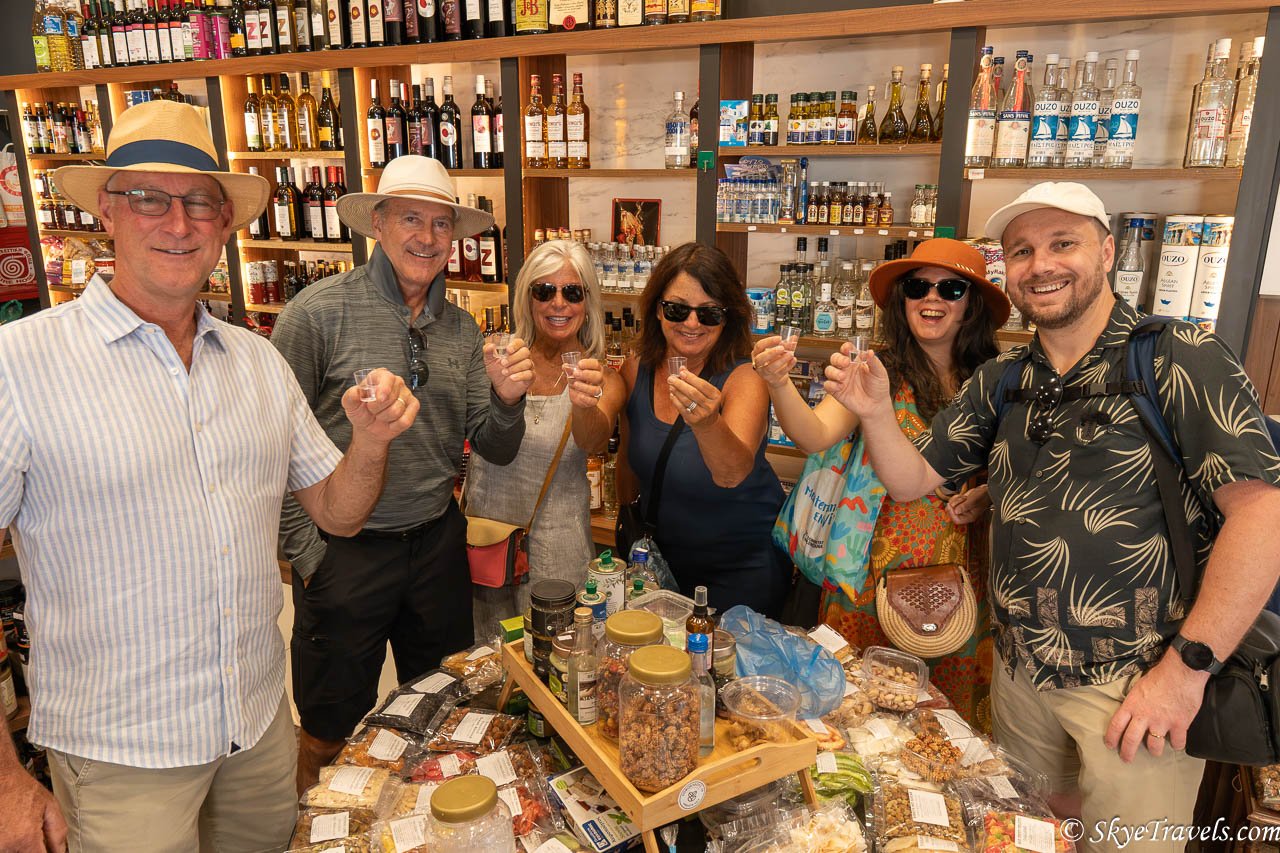
When looking for the best Athens food tour, I avoided big corporate food tour companies and instead searched for a small, local company with stellar reviews covering food quality and enthusiastic guides. I ended up on the Ultimate Food Tasting Tour of Athens with Athens Food on Foot, and I loved it.
Without spoiling too much, here are some details I learned on the tour, my favorite Greek dishes, and why it’s still worth taking the tour instead of just reading about it.
What Makes Greek Cuisine Unique
Greece has a culture that dates back thousands of years, and that shows in the Greek cuisine. However, just like most foreign cuisines, I don’t think many Westerners fully understand or have ever tried authentic Greek dishes, unless they have been to Greece themselves. For instance, for most of my life I thought falafel was Greek. Conversely, my wife said she detested feta until she tried real feta in Greece.
In Greece, I found many dishes similar to Turkish ones, such as Greek baklava, Greek coffee, moussaka, kofte, and more. Some differences were subtle, while others were quite noticeable. To be fair, it’s been a few years since I was in Turkey, but I could still tell that what I had in Greece was unique and delicious. The Athens Food on Foot Food Tour helped with that, as well as with picking the right restaurants and cafes during my time there.
Finding My Favorite Dishes in Athens
I couldn’t possibly name every dish I had on the best Athens food tour. For one thing, I was working with the camera more than taking notes. But we just ate so much food that I lost track of everything. A couple of the market stops included numerous samples. Still, I had a few highlights from the tour, along with some dishes I found afterward, though it’s impossible to say which was my favorite.
Koulouri
Koulouri was our first dish on the food tour, and also something very similar to the simit I had in Istanbul years ago. It’s ring-shaped bread like a thin bagel with a giant hole covered with sesame seeds.
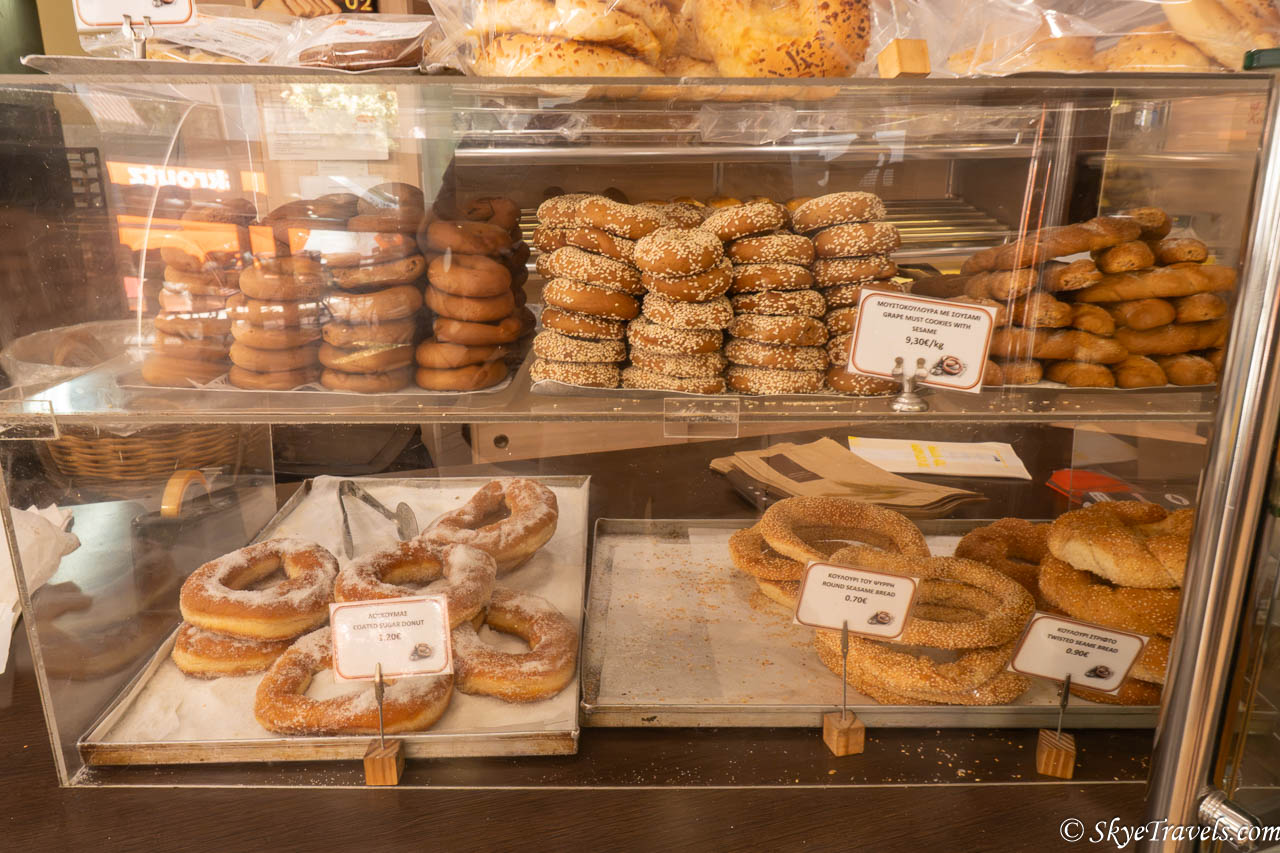
The stop had kourouri with various fillings, just like you can find with bagels, such as ham and cheese, turkey and cream cheese, etc. We had ours plain, which was a good thing, since there was plenty more food coming on the food tour.
Bougatsa
One of my favorite dishes I found in the Greek Cuisine vaguely reminded me of borek. Bougatsa is a Greek breakfast dish made with phyllo pastry and can be sweet or savory. If I remember correctly, we tried three flavors: custard, spinach, and minced meat. I couldn’t say which I enjoyed more. They were all delicious.


The tour brought us to a place called Creme Royale. I don’t have many other places I tried to compare it to, but the quality was excellent, and they had quite the selection of pastries to choose from. They had three locations, but one has permanently closed, leaving a bakery in the city center and one on the west side of the Acropolis.
Greek baklava
I’m certainly no stranger to Turkish baklava, as it was a flavor that I grew up loving. However, I never really understood how it differed from Greek baklava until the food tour. Just like different versions of pizza or ice cream or whatnot, they are similar dishes, but not the same.
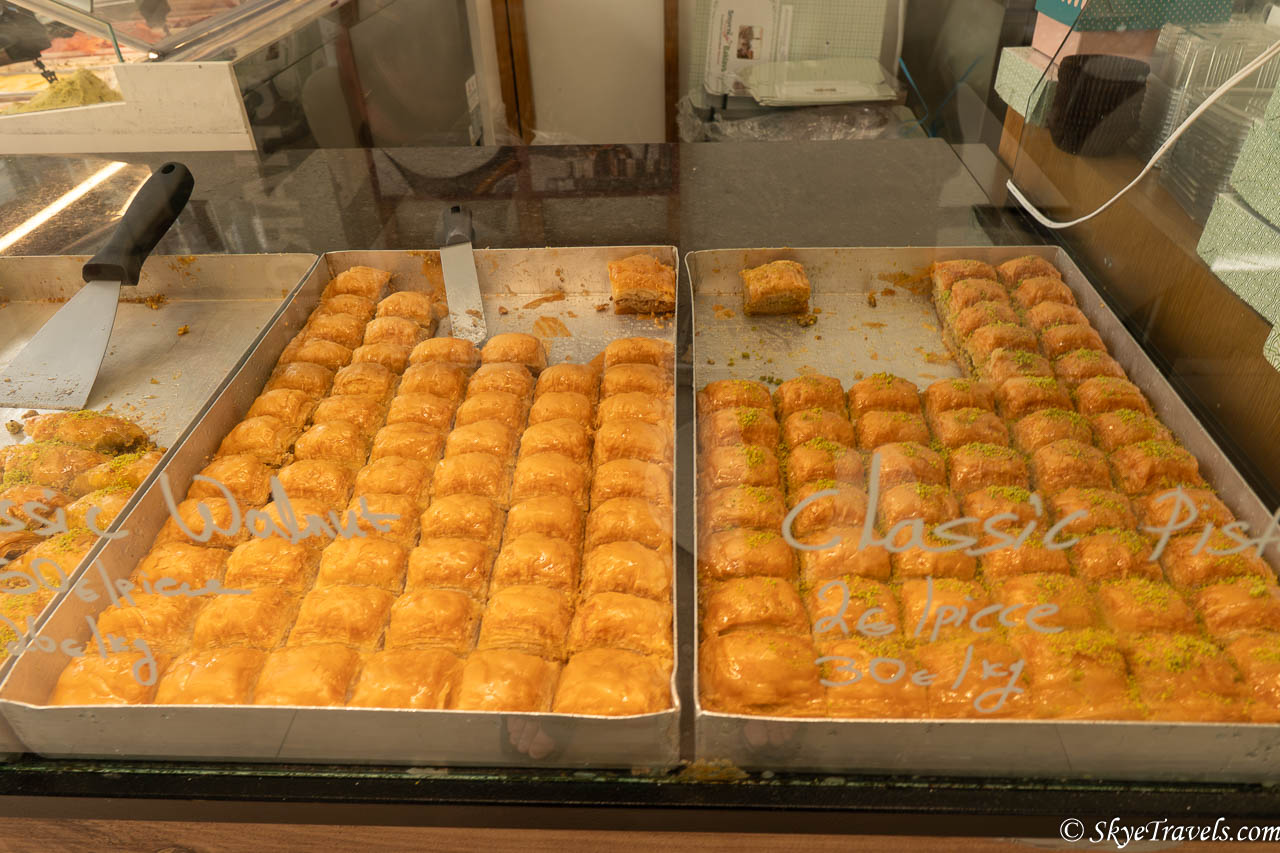
Unlike Turkish baklava, which focuses on pistachios and walnuts, a sugary syrup, and normally no spices, Greek baklava has more walnuts and maybe some almonds, uses a honey-based syrup, and includes spices like cinnamon and cloves. Even the pastry is a bit different, with Greece using slightly thicker phyllo sheets. Of course, I love both variants of baklava just about equally.
Greek coffee
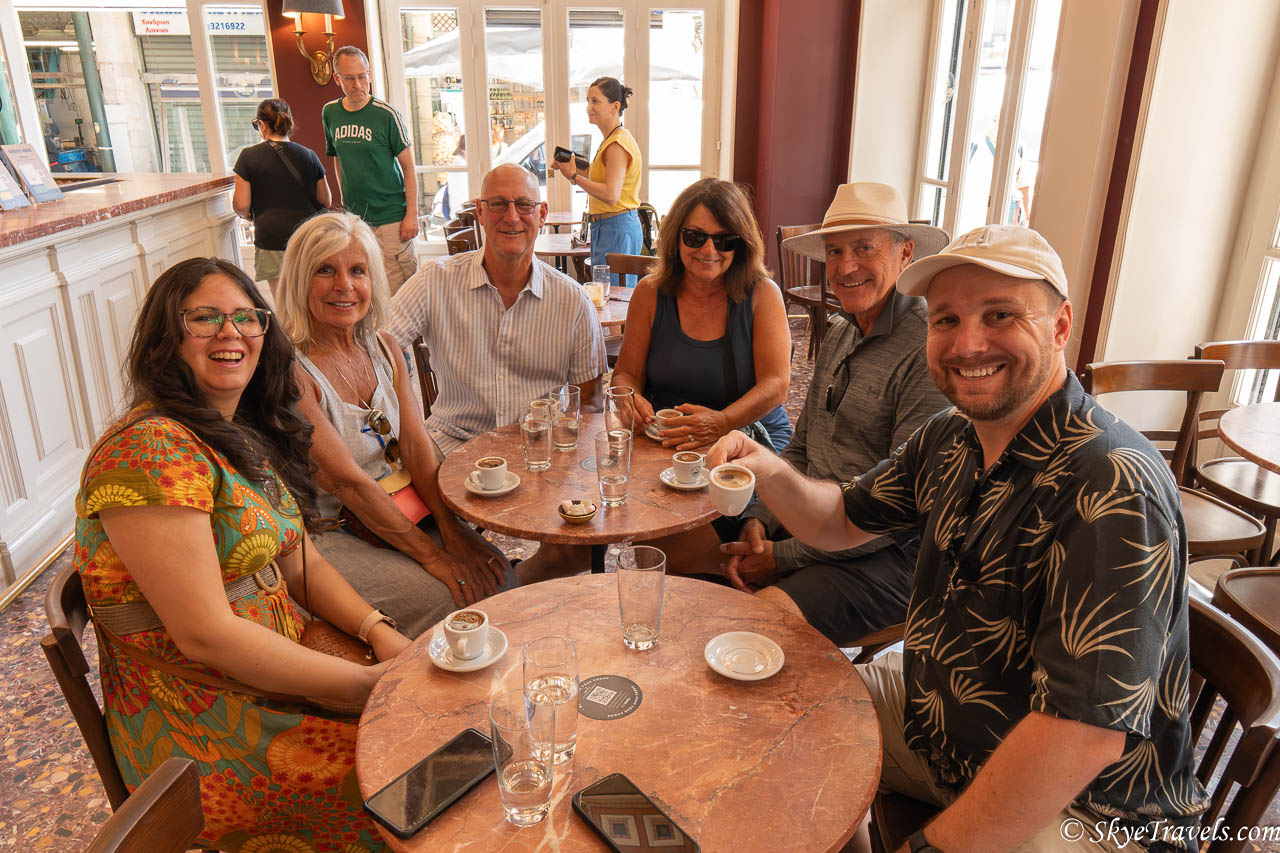
Trying to get the differences between Greek and Turkish coffee is interesting, and I felt even the guide was pushing the distinction a bit too far. Essentially, they are practically the same. It’s true that a lot of the coffee I had in Turkey was stronger, bitter roasts (most likely Robusta beans). The cafes I went to in Greece used an espresso shot of Arabica beans, then brewed it with water and sugar in the traditional way.


I’ve long since developed an appreciation for third-wave coffee, especially through my own food tours, and I found quite a few excellent cafes in Greece that served such coffee. However, that’s not traditional Greek coffee. But whether Greek coffee is different than Turkish coffee really just comes down to who you ask and who prepares it.
Ouzo
As someone who doesn’t really like alcohol, I was surprised by how much I liked the flavor of ouzo, Greece’s national liquor. The base is grapes (wine-making dregs), and the distillation includes spices, primarily anise, giving it a distinct black licorice flavor. It can also have other winter spices like cardamom, cinnamon, cloves, and even coriander.
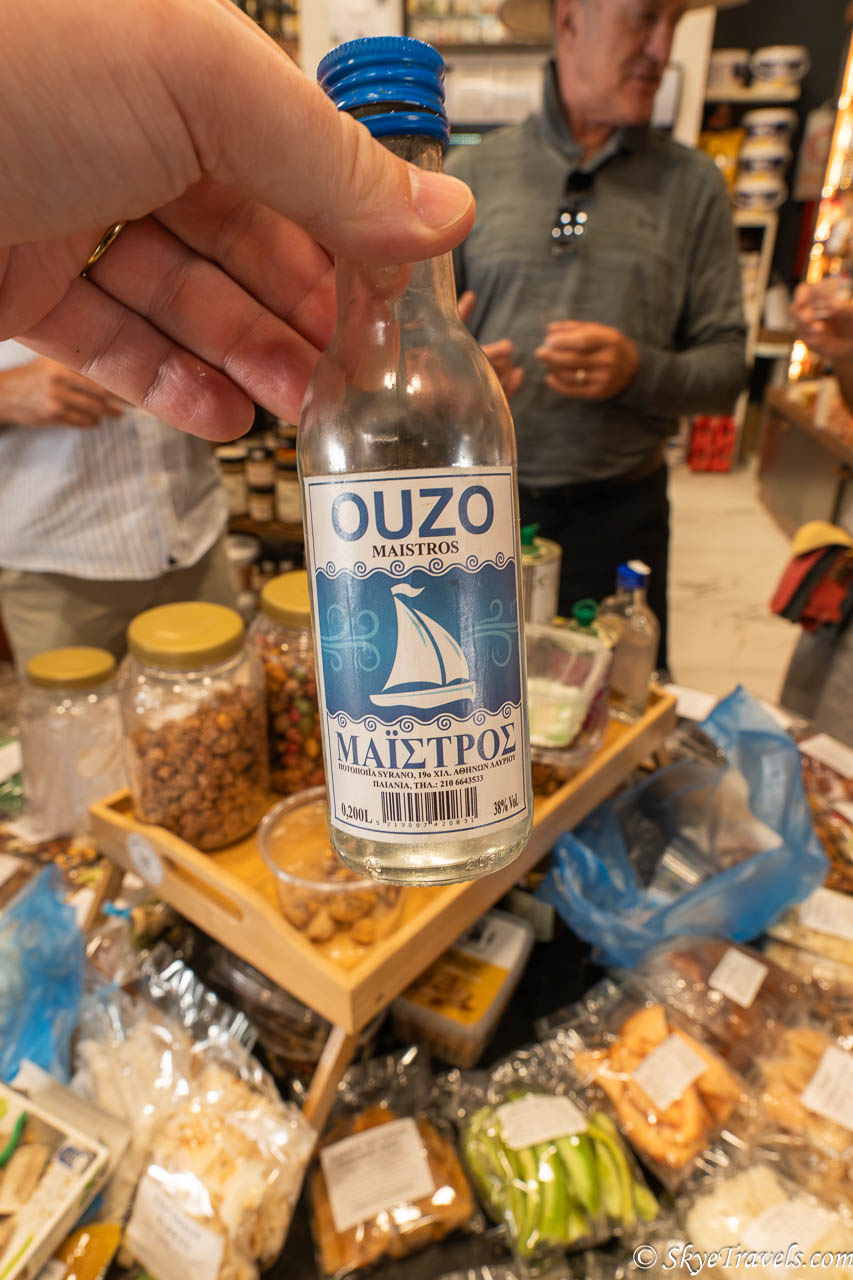
Not everyone likes licorice, but I love it. I also particularly enjoy winter spices, so a drink that combines both flavors is nice for me. But it’s still strong spirits, so I was satisfied with a small sample. Then again, Greece has roughly 300 brands of ouzo, and the one we tried, Maistros ouzo, isn’t particularly known as a great brand. Someday I’ll have to try one of the best brands to see how they compare.
Feta
Feta is a Greek cheese that dates back to ancient history. It combines sheep milk and potentially some goat milk with a salt water brine for at least a couple months. Even Vanesa, who doesn’t usually like feta, loved the sample we were given from a local cheesemonger on the tour.


Feta is a Protected Designation of Origin (PDO) product like Parma ham, Champagne, Cornish pasties, etc. While Greece secured the designation, the cheese has been made for millennia in the region that includes Albania and North Macedonia. True feta can’t be made with cow’s milk, and some authentic feta is unpasteurized. Of course, different dairy producers and cheesemongers prepare it differently.
Souvlaki and gyros
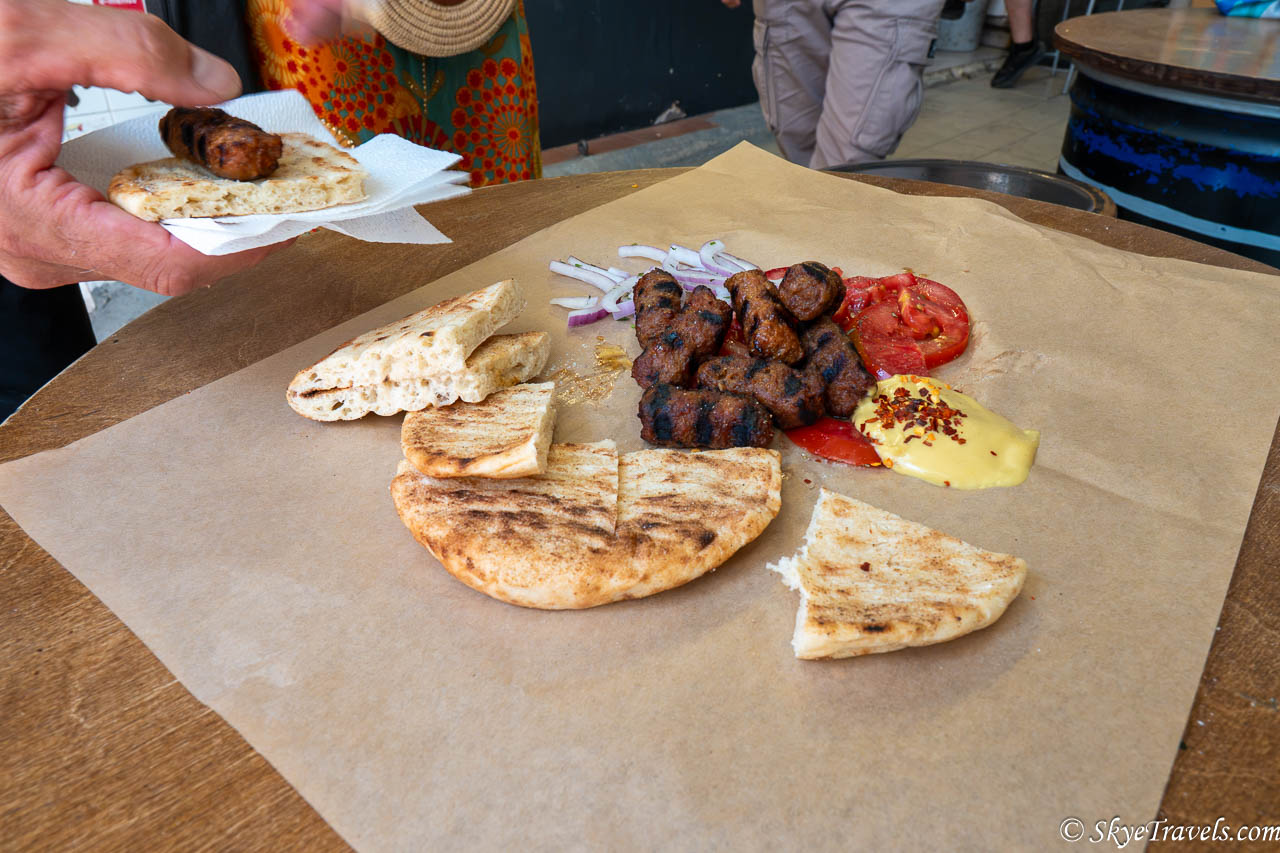
I’m still a bit confused about the difference between souvlaki, gyros, and even kebab and shawarma, for that matter. They’re all very similar dishes. However, the meat preparation, bread, and spices all differ. Instead of shavings, souvlaki uses bite-sized pieces of meat marinated and roasted on metal skewers, then typically served on a plate with other vegetables, sauces, and pita to assemble yourself.


On the other hand, gyros means “turn”, and gyros are mostly shavings of pork or chicken from a cone of meat seasoned with various Mediterranean spices, served in a pita wrap with tomatoes, onions, tzatziki sauce, and fries. Döner is the Turkish word for “turning,” and the dish is similar. Doner meat is often lamb, beef, or chicken (no pork), seasoned with different spices, and served with yogurt in a wrap or with rice.
The tour took us to the Aggelos Stavros Ouzeri, a stall at the central market with a perfect 5.0 rating on Google, to share plates of souvlaki. I absolutely loved the portion, and I ordered a few more at different locations over the next week, along with some gyros. When in Greece…
Stifado
Practically every country has a national stew, and the one in Greek cuisine is called stifado. Strangely, while much of Latin comes from Ancient Greek, stifado is an old Italian word meaning “to stew” from the 13th century when the Venetians occupied Greece.
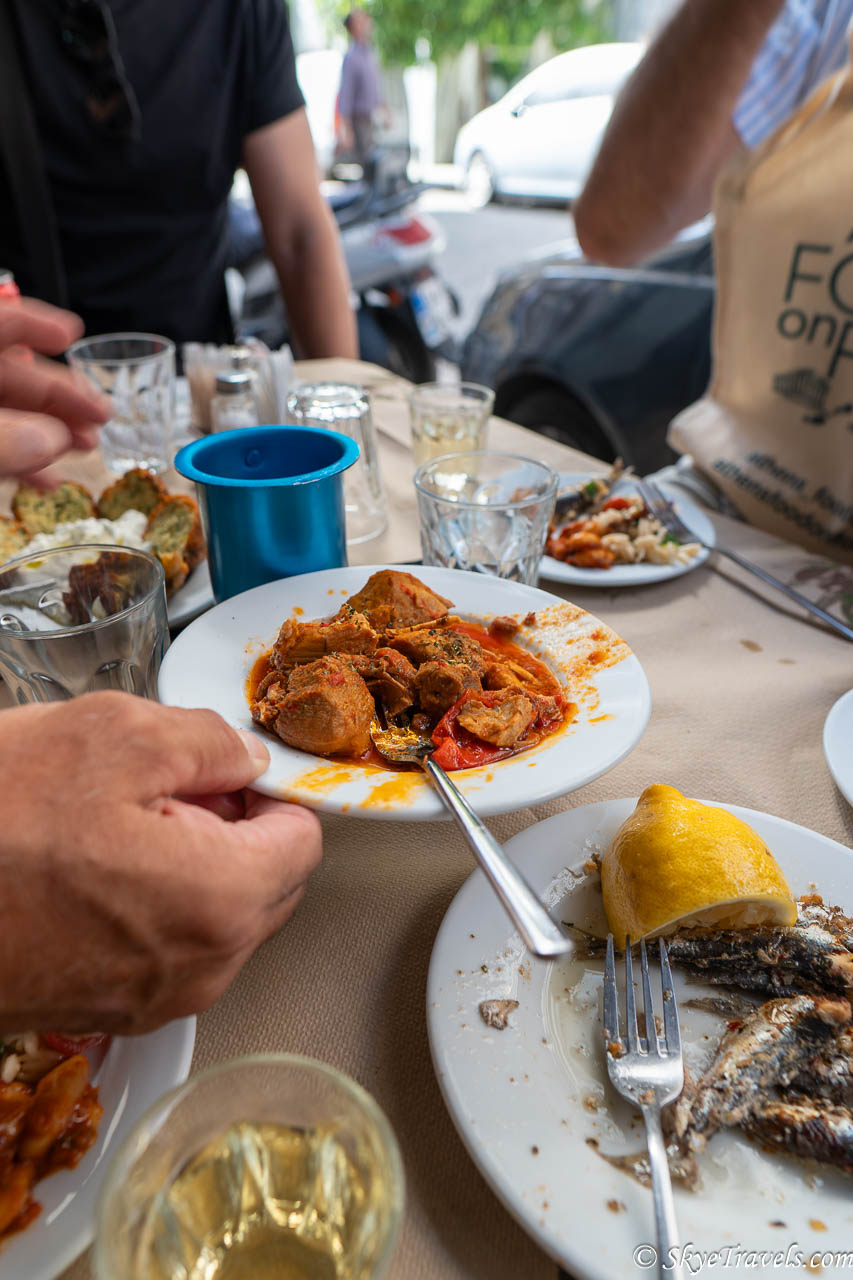
Stifado is made with meat (typically beef), pearl onions or shallots, a red wine and tomato sauce, Italian herbs, and winter spices like cinnamon, cloves, and allspice. It certainly has a different flavor profile than most other stews I’ve tried, and I loved it (probably because I love winter spices). The tour took us to a hole-in-the-wall a few streets away from the touristy part of Athens. However, the restaurant was quite busy, so I couldn’t call it a hidden gem.
Kayianas
One dish I didn’t have on the Athens food tour, but found later at a wonderful family-run cafe in southern Santorini, is kayianas, somewhat similar to shakshuka. It’s a Greek breakfast dish made with scrambled eggs, ripe tomatoes, extra virgin olive oil, feta, and seasonings. Its North African counterpart, shakshuka, uses poached eggs, has more spices, and doesn’t always have feta or any cheese.
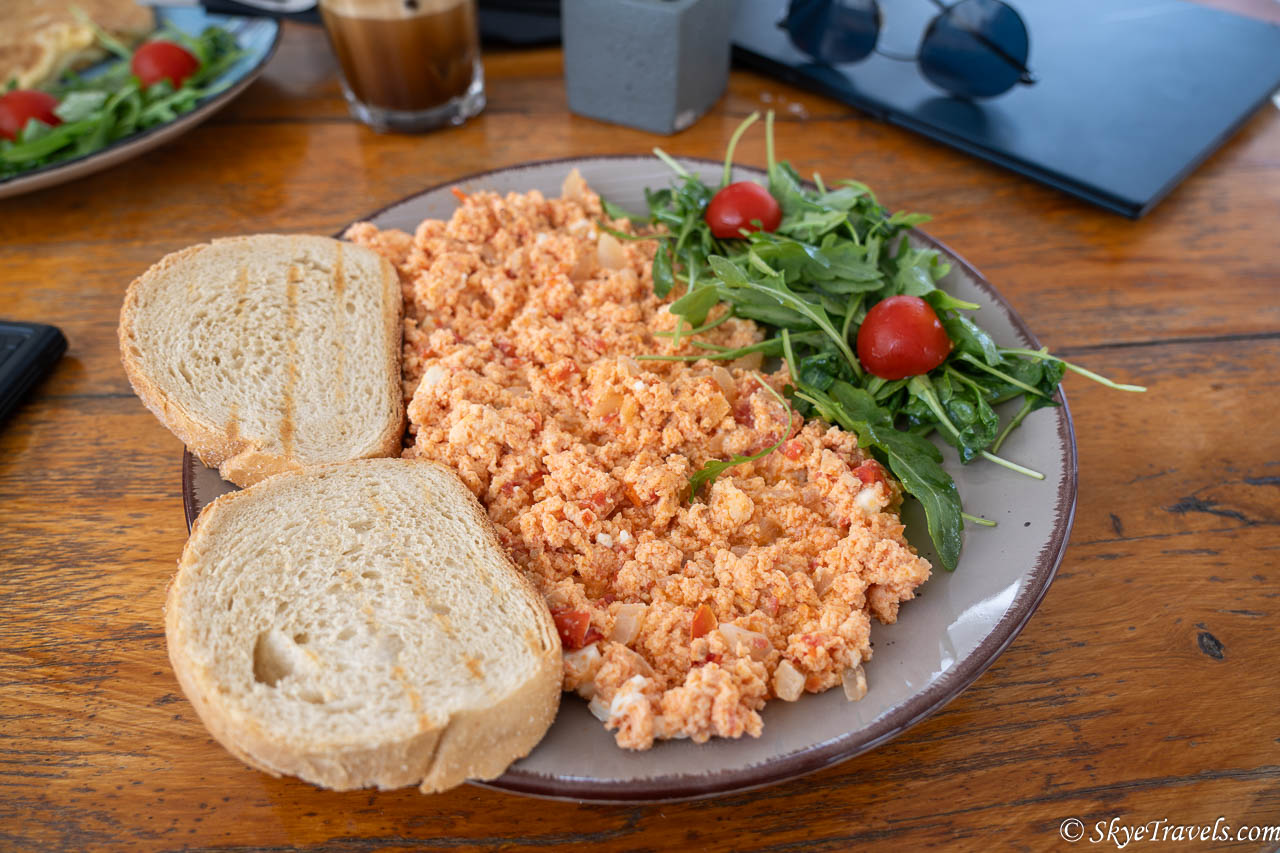
The amazing cafe we found it at is called Spitaki. They are closed for the off-season, but they will reopen in the spring of 2027. The staff is incredibly friendly, and the prices are far more reasonable than you’ll find at the tourist traps.
Portokalopita
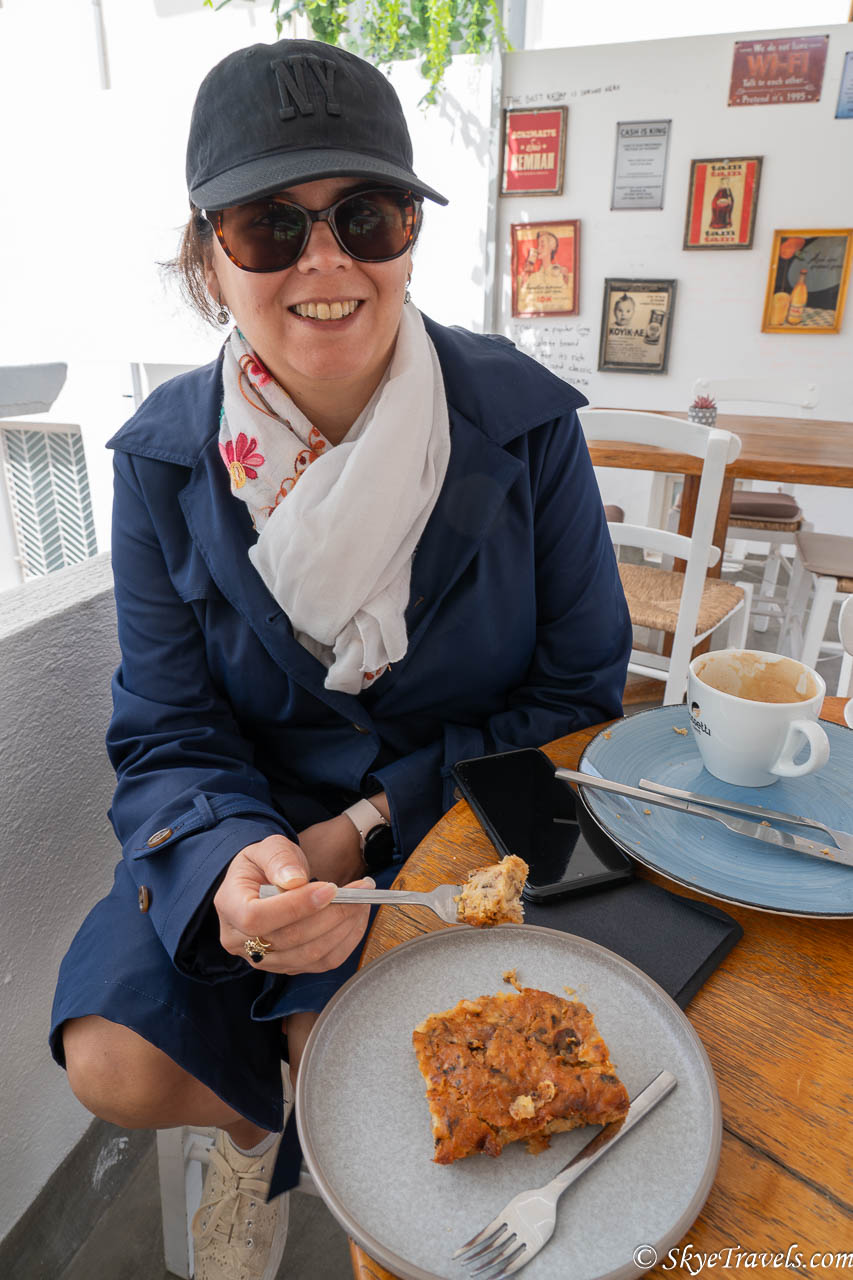
Spitaki also served us an incredible orange cake called portokalopita. It’s made with crumbed phyllo pastry soaked in a mixture of eggs, sugar, Greek yogurt, olive oil, fresh orange juice, orange zest, and vanilla. It tastes even better than it sounds. As you’ll find at most of the best hidden gem spots in Greece, the mom at Spitaki cooked all the food. I only wish we had found them at the beginning of our stay on Santorini so we could have visited more often, but we’ll be back there next time for sure!
A Review of the Best Athens Food Tour
After combing through all the available food tours in Athens and avoiding big corporate companies like Secret Food Tours and Eating Europe that care more about making money than delivering a high-quality tour, I settled on Athens Food on Foot. Anna Tzogia started the company in 2016, focusing on quality and guest experience above all else. She shares the same passion I have with my own Edinburgh food tours.
Vanesa and I did the Ultimate Food Tasting Tour of Athens, their signature tour and the one covering the most authentic dishes. The tour lasted four hours and, while we were still in the touristy part of Athens, I believe our guide took us to some good, authentic establishments. We tried so many dishes that I lost track of them. Some stops included multiple samples. The final stop was a full meal with multiple entrées to share, though the highlight was the stifado.


The tour departs multiple times a day every day of the year. As mentioned, the tour lasts four hours, and you should expect to be full by the end. In fact, you might need to pace yourself to ensure you’re not completely full before you even get to the final stop and the main feast. Check the Athens Food on Foot website for their full list of tours, current pricing, and departure times.

Further Reading
If you’re looking for the best food tours around the world, here are some other suggestions of tours operated independently by passionate locals.
- The Stockholm Food Tour is So Much More Than Meatballs!
- A Moroccan Food Tour to Find the Best Dishes of Marrakech
- Finding My Favorite Romanian Dishes on the Bucharest Food Tour
- Pho and Egg Coffee on the Old Quarter Street Food Tour in Hanoi with Lan
- I Ate Too Much Good Food on the Food Tour in Krakow
- Asado Adventures Isn’t Just the Best Food Tour in Buenos Aires
This post may contain affiliate links. These links help give me the wherewithal to continue traveling at no additional cost to you. For more information, click here.